
The Buying Process

Buy with confidence, step by step.

This guide walks you through every step of the home buying process — from initial consultation to moving in and making upgrades. Its goal is to keep you informed and confident, help you make smart, data-driven decisions, and show you how a professional buyer’s agent works for you.

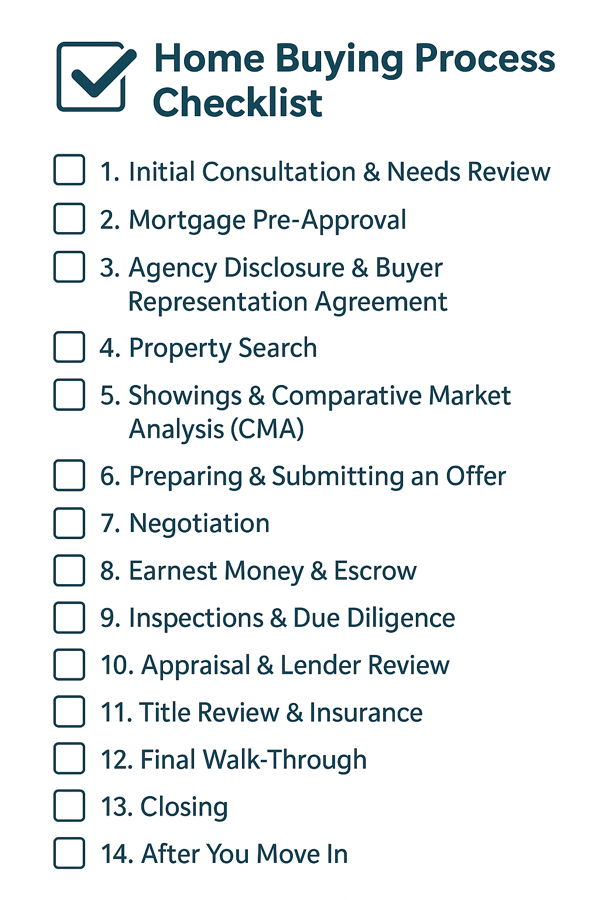
Home Buying Process Checklist listing all 14 steps

The 14 steps at a glance

Follow the steps in order — each one is numbered to reflect the typical sequence of buying a home. Revisit any step as questions come up along the way, and reach out anytime.

What Happens

We start by discussing your goals, timeline, budget, and preferred neighborhoods. We’ll identify must-haves and deal-breakers, review lifestyle factors (schools, commute, amenities), and set expectations for the home search. This conversation helps create a personalized strategy just for you.

Why It Matters

This ensures we focus only on homes that truly meet your needs.

Schedule a Consultation

What Happens

You meet with a lender to get pre-approved. This shows how much you can borrow and proves to sellers that you are serious. Rod & Stone can guide you to trusted lenders!

Why It Matters

Pre-approval helps you avoid falling in love with homes outside of your budget and strengthens your offer, making sellers more likely to take you seriously.

What Happens

We review the Michigan Agency Disclosure form and, if you choose, sign a Buyer Agency Agreement, which makes me your legal agent.

Why It Matters

This protects your interests. You have an agent whose job is to negotiate for you, not the seller. It ensures transparency and trust in the process.

What Happens

Create a custom home search based on your preferences, sending alerts when new homes are listed.

Why It Matters

You won’t miss out on opportunities. The search is targeted so your time is spent efficiently on homes that truly match your needs.

Set Up Your Personalized Search

What Happens

We tour homes together. When you like one, I provide a Comparative Market Analysis (CMA) to check if the price is fair.

  • Compares apples to apples — we look at recent sales of similar homes in the area (size, features, upgrades — we factor in the differences), so your offer matches the home’s real value, not just a guess.
  • Reveals market trends — are prices going up or down? Are homes selling fast? You’ll know whether to move quickly or negotiate strategically.
  • Guides your offer — with the CMA, you can make a confident offer that stands out but protects your wallet.

Why It Matters

Touring helps you visualize living in the home, and the market analysis ensures you’re making a smart financial decision, avoiding overpaying.

What Happens

I help write an offer with price, terms, contingencies, and legal protections using Michigan-approved forms.

  • Price — how much you’re willing to pay for the home.
  • Terms — closing date (when you’ll officially take ownership), earnest money deposit (a “good faith” deposit showing you’re serious), and financing terms (cash, mortgage, etc.).
  • Contingencies — conditions that protect you: inspection (back out or ask for repairs if issues are found), appraisal (ensures the home is worth what you agreed to pay), financing (cancel if your loan falls through), and title (no legal claims or liens on the property).
  • Legal protections — Michigan-approved forms ensure your offer is legally valid, clearly stating your rights, deadlines, and remedies if something goes wrong.

Why It Matters

A clear, strong offer increases your chance of getting the home while protecting you legally and financially. Mistakes in the offer can cost money or even the home.

What Happens

If the seller counters your offer, I guide you through your options — whether to accept, reject, or make another counteroffer. We’ll evaluate price adjustments, contingency changes, and closing timelines or other terms. I help you weigh each option so your response protects your interests and strengthens your position.

  • Save you money
  • Secure needed repairs or concessions
  • Ensure favorable terms without overpaying
  • Prevent agreeing to anything that could cause problems later

Why It Matters

We negotiate with integrity, aiming for an outcome where all parties feel respected and satisfied. This ensures the deal moves smoothly and you feel confident every step of the way.

What Happens

Earnest money is a good faith deposit showing the seller you’re serious about buying the home. It’s held safely in an escrow account — a neutral, secure place managed by a third party until closing. This deposit is applied toward the purchase price of your home.

  • For you: strengthens your offer, keeps your purchase secure, and is refundable if contingencies like inspections, financing, or appraisal aren’t met.
  • For the seller: shows commitment, protects them from lost time or other buyers, and can compensate them if the buyer backs out without a valid reason.

Why It Matters

Earnest money and escrow work together to protect both sides — giving the seller confidence while keeping your deposit safe and reducing the amount you owe at closing.

What Happens

You hire a home inspector to check the property for issues. Repairs or price adjustments can be requested if problems are found.

Why It Matters

Identifying issues early avoids unexpected costs or unsafe conditions. It gives you confidence in the home you’re buying.

What Happens

Your lender orders a home appraisal. A licensed appraiser visits the property and evaluates its current market value based on factors like:

  • Size, condition, and layout of the home
  • Upgrades or renovations
  • Comparable sales nearby (“comps”)
  • Location, lot size, and neighborhood trends

The appraiser then creates a report that tells the lender the estimated value of the home.

Why It Matters

The lender uses the appraisal to confirm the home is worth the price you’re paying. At or above your offer, the loan moves forward smoothly. Below your offer, you may renegotiate the price, increase your down payment to cover the difference, or walk away if contingencies allow.

What Happens

Before closing, a title company or attorney reviews the property’s title to make sure it’s clear of liens, claims, or legal issues. You’ll also purchase title insurance, which protects you and the lender if any undiscovered issues arise in the future.

Why It Matters

Ensures you’re buying a home free and clear of ownership disputes or debts, protects your investment if a past owner or creditor has a claim, and gives you peace of mind that your ownership is secure.

What Happens

Before closing, you’ll do a final walk-through of the home — usually 24–48 hours before the settlement. This is your opportunity to:

  • Verify that any agreed-upon repairs have been completed
  • Ensure the home is in the same condition as when you made your offer
  • Check that all included items (appliances, fixtures, etc.) are present and working

Why It Matters

Confirms that the seller fulfilled their obligations before you take ownership, helps you avoid surprises on closing day, and ensures a smooth transition into your new home.

What Happens

Closing is the final step in buying your home. During this meeting, you’ll:

  • Review and sign all legal documents (purchase agreement, mortgage, disclosures)
  • Pay closing costs and remaining down payment
  • Receive the keys to your new home

Your lender and title company coordinate the transfer of funds, and ownership officially passes to you.

Why It Matters

Ensures the home is legally transferred into your name, confirms all financial and legal obligations are met, and marks the moment you become the official homeowner.

What Happens

After closing, it’s time to move into your new home — transferring utilities, setting up essentials, unpacking, changing your address, and planning renovations or improvements with your builder’s guidance. Common updates include:

  • Painting walls or cabinets
  • Updating lighting fixtures or hardware
  • Flooring upgrades (hardwood, tile, or carpet)
  • Kitchen or bathroom remodels

As a licensed builder, Rod & Stone can advise you on which renovations add value, how to budget effectively, and even coordinate the work so it’s done right the first time.

Why It Matters

Ensures your home is comfortable, functional, and reflects your style — and protects your investment by making sure the work is done professionally and safely.

Plan Your Upgrades

Questions at any step?

I’m here to guide you.

Reach out with questions anytime — let’s make your home buying experience smooth and stress-free.

Talk Through the Process